
Misconducting in public office
An ancient offence in the news - and how it usually is used only for junior officials
If conduct is a verb, then misconducting must be a verb too.
And when a someone in public office - what we can call a public official - is misconducting in that public office then that is an offence under the common law of England and Wales.
Being a common law offence means that it is not set out in any Act of Parliament or other statutory instrument. It is instead an offence which we put together by a combination of law reports (of old judgments) and judicial reasoning: judge-made law.
(Murder is another common law offence.)
Misconduct in public office is an ancient offence. One can trace it back to early modern, even medieval times. It was an offence for those with trusted public offices when they did something to betray that trust. As such it was deliberately, helpfully vague: misconduct in a public office can take many forms and so there was no point in the law being too exact. One would know misconduct in public office when one saw it.
And then, in the 1800s and early 1900s, the law was pretty much forgotten about.
And then, at the end of the 1900s, the law began to revive, especially with police officer cases where the alleged misconduct of the police officer did not fit easily into more defined criminal categories.
The law of misconduct in public office was taken off the common law bookshelves and the dust blown away.
But the law was still vague, and so in 2004 the Court of Appeal in a reference from the Attorney General reframed the judge-made law for modern times, so as to make it a little less vague.
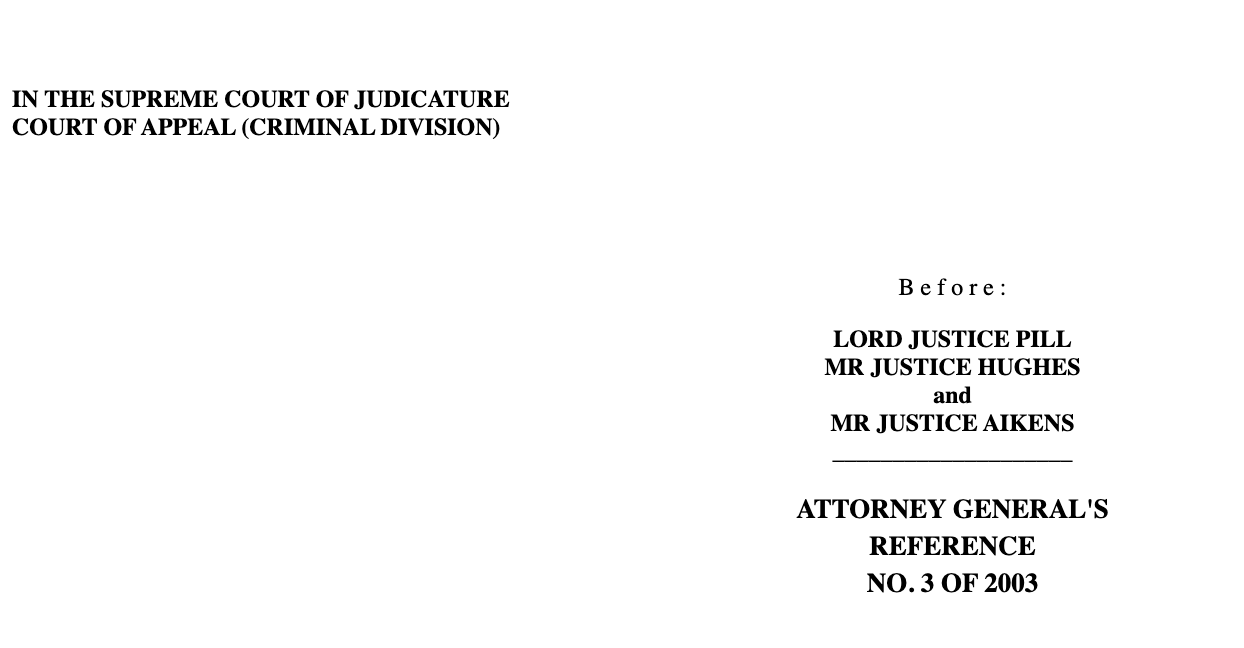
The key paragraph of the judgment says (referring to other paragraphs of the judgment):
The circumstances in which the offence may be committed are broad and the conduct which may give rise to it is diverse. A summary of its elements must be considered on the basis of the contents of the preceding paragraphs. The elements of the offence of misconduct in a public office are:
1. A public officer acting as such (paragraph 54).
2. Wilfully neglects to perform his duty and/or wilfully misconducts himself (paragraphs 28, 30, 45 and 55).
3. To such a degree as to amount to an abuse of the public’s trust in the office holder (paragraphs 46 and 56 to 59).
4. Without reasonable excuse or justification (paragraph 60).
As with other criminal charges, it will be for the judge to decide whether there is evidence capable of establishing guilt of the offence and, if so, for the jury to decide whether the offence is proved.
*
With this re-statement, the law continued to be used mainly on police officers (and also now prison officers) whose misconducting did not fit neatly into other offences.
And then when the hacking and press standards scandal exploded, and evidence was revealed of unauthorised disclosures by police and prison officers and by other junior or mid-ranking officials, then the law was used to punish the disclosing officials.
This was the once famous Operation Elveden.
Significantly, it did not strictly matter if an unauthorised disclosure was in return for money: the offence was made out when there was an unauthorised disclosure which amounted to misconduct in public office.
And so again, the law was used because of facts that did not fit neatly into established criminal law categories.
The Crown Prosecution Service, however, generally came a cropper when they sought to extend the offence, via “aiding and abetting” etc - to the reporters who received the information.
(One wonders whatever happened to the then head of the Crown Prosecution Service?)
*
One significant feature of the law of misconduct in public office - at least in its modern incarnation - is that is has never been successfully used against a high-profile individual.
It seems so far to be an offence for the junior officer class, and not for the senior officer class.
A couple of attempts to use it against politicians have failed.
And the politicians who went down with the expenses and other scandals were prosecuted under fraud and other offences.
*
One problem with the the offence is what also makes it so useful: its vagueness.
The Law Commission who did an impressive report on the offence says that its vagueness leaves it open to challenge on human rights grounds. This is because criminal law should always be sufficiently certain so that individuals can regulate their own conduct (and misconduct).
The government accepted this and the current (stalled) Hillsborough law contains replacement laws.
But those more defined laws are not in place.
*
Recent news reports indicate that the offence may be used in high-profile cases.
But, if so, nobody should assume that such prosecutions will be easy.
Though, that said: if such a law exists, then it really should not be an offence only for the junior ranks.
For the senior ranks of public officials can go about misconducting too.
Thank you for your enlightening post on such a sensitive and momentous matter. As always, we are grateful for your time and work in telling us about the law.
Thanks, I particular enjoyed this reference ‘One wonders whatever happened to the then head of the Crown Prosecution Service? ‘